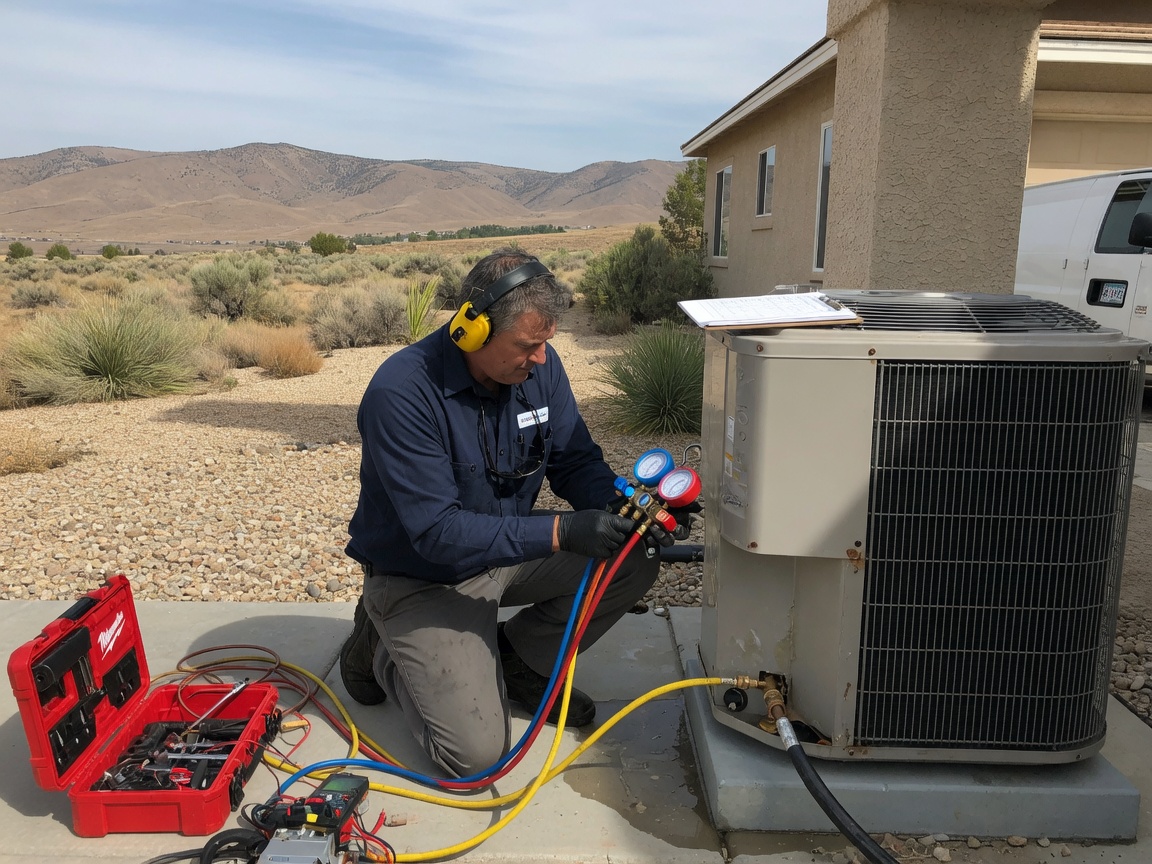
Reno's high desert climate pushes heat pumps hard. Summer highs above 90 degrees run the cooling side continuously while winter lows in the teens force frequent defrost cycles that can strain reversing valves and drain lines. Homes in older Midtown and Old Southwest neighborhoods often have systems installed when builders used basic slab ducts that collect dust from the Truckee River corridor, cutting airflow and forcing the compressor to work overtime. Technicians here routinely check for ice buildup on outdoor coils after overnight freezes and verify that auxiliary heat strips engage properly when temperatures drop below the balance point.
Washoe County building practices in areas like Caughlin Ranch and Somersett place many units on rooftops or side yards exposed to wind-driven dust and pollen. This accelerates coil fouling compared with coastal regions, so service calls frequently include coil cleaning with non-acidic solutions that won't corrode aluminum fins common on units installed after 2010. Elevation changes around Damonte Ranch also affect refrigerant pressures, requiring techs to recalibrate superheat and subcooling values on site rather than relying on factory charts. Skipping these adjustments leads to short cycling during shoulder seasons when daytime and nighttime temperatures swing thirty degrees.
Nearby Sparks and Carson City homes share the same high desert conditions, but Reno's older housing stock means more 15- to 20-year-old units still in service. During service visits we inspect contactors for pitting caused by frequent starts in dusty conditions and test capacitors that degrade faster in the dry heat. Proper documentation of these findings helps homeowners plan replacements before a mid-winter failure strands them without heat.
Technician insight
In Reno the thing that catches most people out with Heat Pump Service is the fine high desert dust that packs onto coils and clogs condensate drains faster than in wetter climates, especially on units serving single-story homes in Damonte Ranch where wind has a straight shot at the equipment.
Frozen Unit in Caughlin Ranch
Homeowner reported no heat after two nights below 20 degrees. We found the outdoor coil iced solid because the defrost sensor had failed. Replaced the sensor, cleared the drain, and confirmed auxiliary strips engaged. System restored full heating before the next freeze.
Heat Pump Service Services We Offer
✓Heat Pump Repair
Diagnose and fix reversing valve, defrost board, or compressor issues that appear when Reno's cold nights trigger repeated defrost cycles.
✓Heat Pump Maintenance
Clean coils, check refrigerant levels, and test auxiliary heat strips to handle the thirty-degree daily swings common in Washoe County.
✓Defrost Cycle Adjustment
Recalibrate sensors and timers so outdoor units in Somersett and Caughlin Ranch do not ice over during clear winter nights.
✓Refrigerant Leak Detection
Locate and repair leaks in linesets exposed to wind and temperature extremes around Damonte Ranch and Midtown properties.
✓Auxiliary Heat Strip Testing
Verify backup electric strips engage correctly when heat pump capacity drops below freezing in Old Southwest homes.
✓Thermostat Calibration for Heat Pumps
Adjust settings for proper staging between heat pump and auxiliary heat during Reno's rapid morning warm-ups.
Heat Pump Service Cost in Reno, NV
| Service | Typical Range | What Affects It |
|---|---|---|
| Diagnostic Visit | $125–$185 | Covers full mode testing; credited if repairs performed same day. |
| Coil Cleaning | $175–$350 | Depends on access and dust buildup common in open terrain neighborhoods. |
| Defrost Repair | $250–$550 | Includes sensor or board replacement; varies with model age. |
| Refrigerant Leak Repair | $400–$900 | Includes leak search, repair, and recharge; larger in older Midtown homes. |
Ranges are typical for Reno, NV and confirmed with an exact written quote before any work starts.
How it works
- 1
Initial Assessment
Arrive at the Reno address, confirm system model and age, and note any visible dust or ice on the outdoor unit.
- 2
Performance Testing
Measure temperatures, pressures, and amperage across both heating and cooling modes under current high desert conditions.
- 3
Component Inspection
Check coils, reversing valve, defrost controls, and drain lines for issues caused by local dust and freeze-thaw cycles.
- 4
Service And Verification
Perform needed cleaning or adjustments, then retest to confirm the unit maintains setpoints through a full cycle.
Pricing
Upfront quote after inspection; diagnostic fee credited toward repairs.