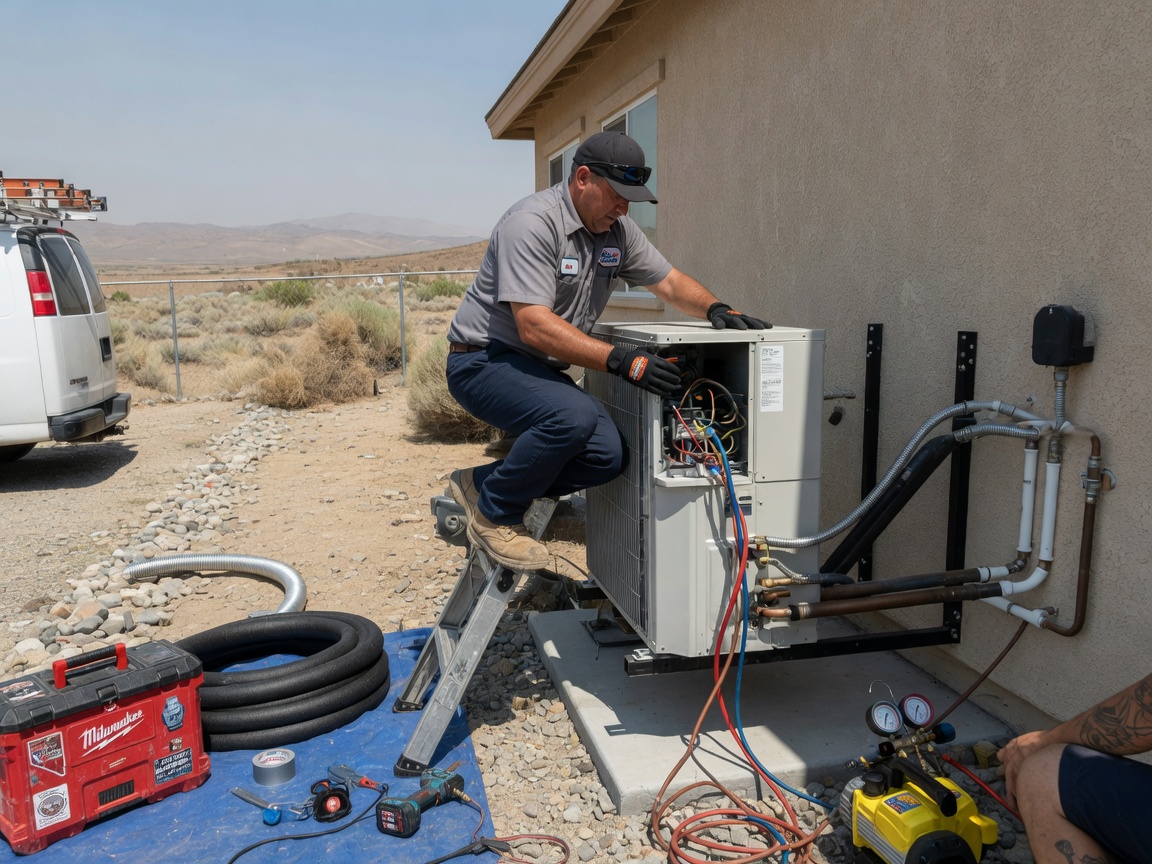
Reno's high desert climate brings intense summer heat that demands properly sized cooling systems, especially in neighborhoods like Midtown and Old Southwest where many homes date to the mid-20th century. These older properties often have undersized or poorly sealed ductwork that leaks conditioned air into attics, raising energy use and reducing comfort. Installers must account for the region's low humidity and frequent wind, which affects how quickly heat builds inside structures and how condensate lines perform.
Proper load calculations are critical before any equipment goes in. Homes in Caughlin Ranch and Damonte Ranch sit on varied terrain that can create microclimates, requiring different tonnage than a comparable house in Sparks. Technicians also verify electrical service capacity and condensate drainage routes to avoid callbacks when winter temperatures drop and systems switch to heating modes. Code requirements in Washoe County emphasize proper refrigerant line insulation and secure mounting to handle gusty conditions common near the Truckee River corridor.
Selecting equipment that handles both extreme summer loads and cold winter nights prevents short-cycling and extends system life. Dual-fuel or heat pump options often suit properties near Lake Tahoe where overnight temperatures swing sharply. Installers check attic insulation levels and recommend sealing before finalizing any new unit placement to avoid moisture issues in the dry climate.
Technician insight
In Reno, the thing that catches most people out with AC Installation is underestimating how much dust and wind affect filter access and coil cleaning on units placed near the Truckee River corridor or in exposed Caughlin Ranch lots. Older homes in Midtown often need extra time sealing return plenums before the new system can run efficiently.
Caughlin Ranch Ranch-Style Home
Homeowner called after two summers of uneven cooling on the upper floor. Assessment showed undersized return air and original flex duct collapsing in the attic. Crew replaced the main trunk, installed a properly sized two-stage unit on a raised pad to clear winter snow, and added a fresh-air intake. The system now maintains steady temperatures during 95-degree afternoons without short-cycling.
AC Installation Services We Offer
✓Central Air Conditioning Installation
Full central system placement with new or upgraded ductwork matched to Reno's hot days and cold nights for even cooling across single-story and two-story homes.
✓Ductless Mini-Split Installation
Zone-specific cooling for additions or older Midtown homes where running new ducts would disturb existing plaster and lath construction.
✓Heat Pump Installation
High-efficiency heat pump systems that provide both summer cooling and winter heating suited to Washoe County's temperature swings.
✓Whole-Home System Design
Custom sizing and layout planning that factors in local wind patterns, sun exposure on south-facing slopes, and existing insulation in Caughlin Ranch properties.
✓Smart Thermostat Integration
Installation of programmable controls that optimize runtime during peak afternoon heat common in the high desert while maintaining comfort at night.
AC Installation Cost in Reno, NV
| Service | Typical Range | What Affects It |
|---|---|---|
| Central AC Installation | $5,200–$8,500 | Higher end when new ductwork or electrical upgrades are required in older Midtown homes |
| Ductless Mini-Split Installation | $3,800–$6,200 | Per zone; multi-zone setups increase total based on number of heads |
| Heat Pump Installation | $6,000–$9,800 | Includes cold-climate rated equipment needed for Reno winters |
| Smart Thermostat Add-On | $250–$450 | Integrated during installation; standalone retrofit costs more |
Ranges are typical for Reno, NV and confirmed with an exact written quote before any work starts.
How it works
- 1
Site Assessment
Technician inspects existing ductwork, electrical service, and insulation levels in the specific Reno neighborhood to determine proper equipment size.
- 2
Equipment Selection
Recommend units rated for high desert conditions, confirming compatibility with cold winter operation and local utility rebate requirements.
- 3
Installation Day
Remove old equipment, set new unit on vibration-isolated pad, connect sealed lines, and integrate with existing or new duct runs.
- 4
Testing And Handover
Verify airflow, refrigerant charge, and thermostat function before walking the homeowner through filter changes and seasonal settings.
Pricing
Pricing varies by home size, existing duct condition, and chosen efficiency level. Upfront quotes provided after assessment.