2026-10-08 · Matt Reynolds
Local Factors That Influence AC Repair Timing in Northern Nevada
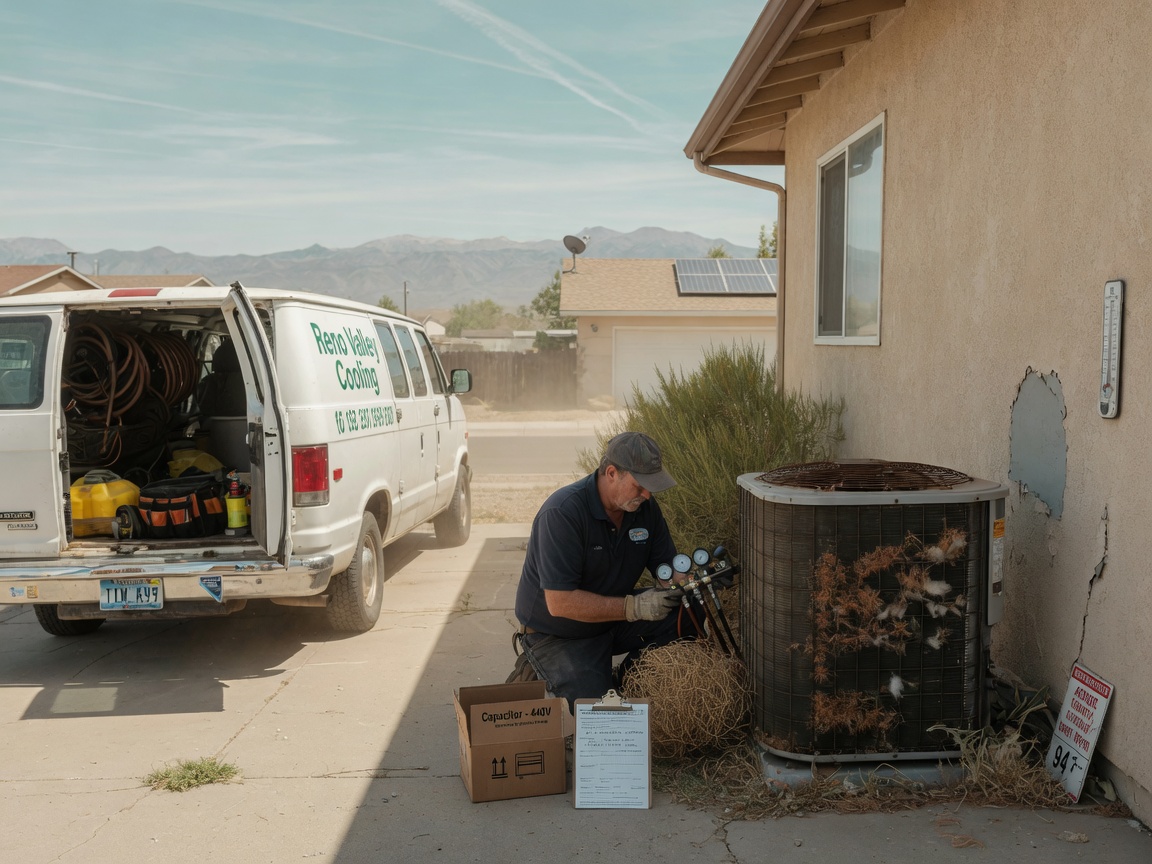
AC repair timing in Northern Nevada depends on the high desert climate's hot summers that push systems hard from June through September, combined with cold winters that shift demand toward heating but leave AC components vulnerable to dust and wear. Homeowners in Washoe County often see failures accelerate after rapid spring warm-ups or following winter dust storms that coat outdoor units near the Truckee River corridor.
High Desert Dust Impact on System Components
Dust from the surrounding high desert settles heavily on condenser coils and filters in Reno and Sparks, reducing airflow and forcing compressors to run longer cycles. In neighborhoods such as Old Southwest and Midtown, older single-story homes with ground-level equipment collect more airborne particles from nearby roads and open terrain. Technicians commonly find restricted coils after just one windy season, which shortens the window for scheduling non-emergency repairs before June heat arrives. Regular filter changes every 30 days help, yet many systems still require coil cleaning by late spring to avoid mid-summer breakdowns. See how Reno's high desert dust affects AC performance for detailed maintenance steps that extend component life.
Rapid Temperature Swings and Seasonal Strain
Daily swings of 30 to 40 degrees between daytime highs and nighttime lows place repeated stress on reversing valves and thermostats throughout Washoe County. Homes in Caughlin Ranch and Somersett sit at slightly higher elevations where these swings are more pronounced, causing expansion and contraction that loosens electrical connections over time. Systems installed before 2010 often show contactor pitting after three or four such seasons. Scheduling inspections in April or October avoids the June-through-August rush when calls spike. Handling AC strain during Reno's rapid temperature swings outlines the specific checks that catch issues before they halt cooling on the hottest afternoons.
Housing Age and Equipment Accessibility
Midtown and Old Southwest contain many homes built between 1950 and 1980 with original or early replacement AC units tucked into tight crawl spaces or low attics. These locations slow diagnostic time because panels and linesets are harder to reach than in newer Damonte Ranch builds. Soil conditions around the Truckee River also contribute to minor settling that can tilt outdoor units, altering refrigerant levels. Repairs on these older systems frequently take longer because parts must be sourced for discontinued models. In contrast, post-2000 homes in Somersett allow quicker access but still face dust loading from construction activity in surrounding foothills.
Coordinating Repairs with Local Weather Patterns
Carson City and Reno share similar high desert patterns, yet Reno's proximity to Lake Tahoe brings occasional afternoon thunderstorms that can interrupt outdoor work. Scheduling service calls for early morning or late evening during July and August minimizes weather delays while systems are under peak load. Homeowners who track local forecasts and book before Memorial Day typically secure same-week appointments rather than waiting during heat waves. Sierra Nevada HVAC operates 24/7 from its base at 5601 Echo Ave Ste CD, Reno, NV 89506, allowing flexible timing that matches these weather-driven needs without added rush fees.